

History of Overwater Bungalows
When overwater bungalows were first introduced, they were offered as the resort’s entry-level option because the inventor thought few people would want to stay there. Now they are in-demand accommodations, reach the height of luxury and can come with a hefty price tag.
They were first invented in 1967 on the island of Raiatea which is the second largest of the Society Islands, after Tahiti, in French Polynesia. The overwater bungalow concept has transformed over the years, expanding from French Polynesia and becoming an ever-evolving, worldwide phenomenon. But one thing has remained in the past five decades: These spectacular rooms present an unparalleled experience nestled amid natural beauty.
Back in 1959, the inventor, HughKelley, a lawyer by trade but sailor by passion, competed in the famed Transpac boat race from his hometown of Los Angeles to Honolulu. Once he got to Hawaii, he decided to sail a bit farther and visit Tahiti for the first time. He fell in love with Tahiti.
Kelley loved the French Polynesian island of Moorea so much that he immediately started trying to convince his two best friends and former fraternity brothers, Donald “Muk” McCallum and Jay Carlisle, to quit their jobs and move to the islands. Eventually they did. Carlisle left his career as a stockbroker, and McCallum quit his job in his family’s sporting goods business and both headed to the island. Initially the three pooled their money to grow vanilla but they couldn’t get the vanilla crops to grow on Moorea.
With little cash left, they noticed some haphazard bungalows on the island and convinced the owner to let them take over the rental properties as a hotel. They named the property the Bali Hai and the trio handled all the hotel’s operations — cooking, bartending and entertaining the guests with fishing trips and fun.
In 1962, a group of reporters passed through Tahiti, and the Bali Hai Boys pulled out all the stops. The wooing worked, earning a seven-page article with the headline “An Enchanted Island” in popular LIFE Magazine. The magazine featured photos of the Bali Hai Boys and their hotel guests boating, swimming, enjoying music and dining together. It put them on the map and Americans were fascinated by this island. People started coming and the business started booming.
By 1967, with two new airports boosting tourism in French Polynesia, the popular hotel expanded from Moorea with a new property on the island of Raiatea, called the Bali Hai Raiatea. But the narrow Raiatea property had the ocean on one side, a road on the other side and very little beach. There wasn’t much room to expand. Building up wasn’t an option so Kelley got the idea of building over the water. Kelley deemed it an entry-level category because he didn’t think people would want to stay there. He was surprised by the interest and that people actually wanted to stay there.
The Bali Hai Boys had to prove to the French government that the overwater bungalows wouldn’t harm the environment and that they were in keeping with the natural landscape. Kelley reminded government leaders about the rudimentary, thatched roof fishing huts on wooden stilts on the island of Huahine and argued that the fishing huts are very much part of the culture and landscape of the island — just like the overwater bungalows would come to be.
After receiving approval, Kelley created the first overwater bungalow with shag carpets and warm wood tones. One luxury feature included “The Tahitian Television”- a window in the floor so guests could watch the fish swim by.
Kelley enjoyed the opportunity to jump into the water directly from a hotel room. After the first overwater bungalows found success on Raiatea, the Bali Hai Boys built more on Moorea and some over a lake in Huahine.
From Primitive to a Luxury
The concept of staying not just in a hotel on the beach but literally on the water continues to enchant and dazzle travelers. Thousands of miles away in Mexico, Palafitos at El Dorado Maroma in Riviera Maya opened in 2016. These bungalows are Mexico’s first and only overwater bungalows and feature a king-sized bed, a jacuzzi, a plunge pool and an outdoor shower. Thirty cabanas with glass floors dot the landscape — a luxury experience tucked away inside each one.
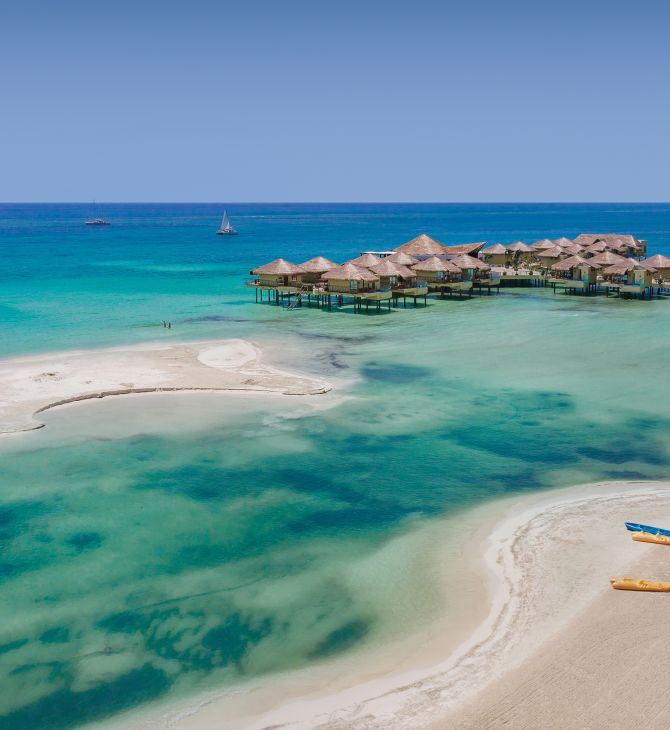
Photo courtesy of Karisma Hotels & Resorts – Palafitos Overwater Bungalows, Eldorado Maroma, Riviera Maya
Walking inside the Palafitos, guests are immediately relaxed by the smell of seawater, the feeling of the ocean breeze, the sounds of seagulls and a thoughtfully designed bungalow. With demand for overwater bungalows increasing plans are to build more Palafitos a bit farther north on Maroma Beach. While the current properties are available for adults only the new ones may be offered for families as well.
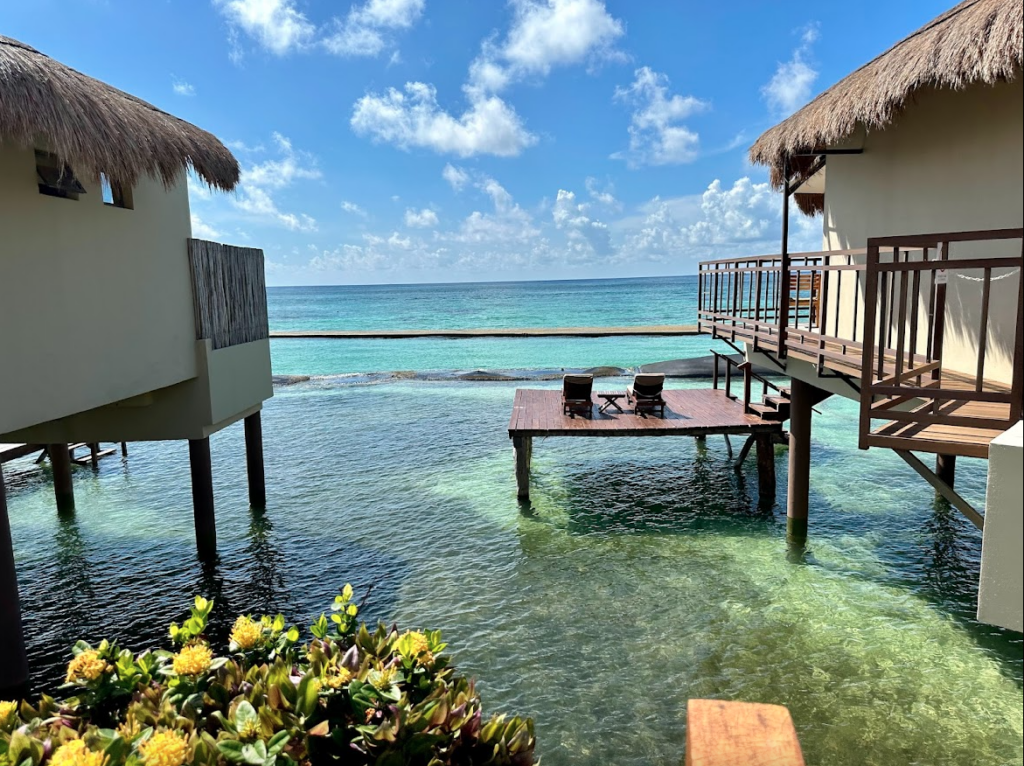
Palafitos at El Dorado Maroma, Riviera Maya, Mexico. Photo taken by Lillian Dikovitsky – Vacation Is Easy
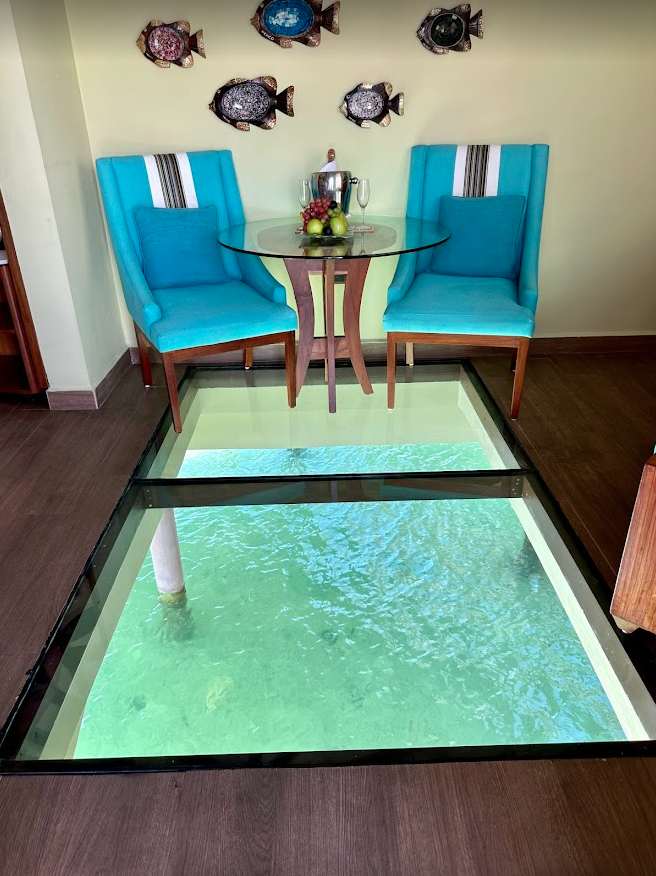
Palafitos at El Dorado Maroma, Riviera Maya. Photo taken by Lillian Dikovitsky – Vacation Is Easy
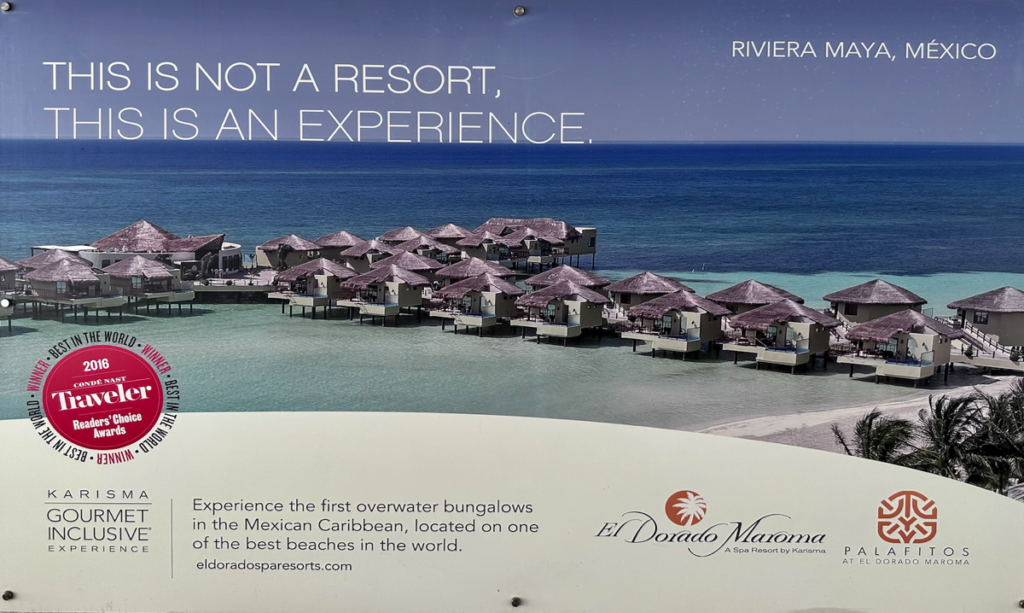
Palafitos at El Dorado Maroma, Riviera Maya. Photo taken by Lillian Dikovitsky – Vacation Is Easy
Back in French Polynesia, the Four Seasons Resort Bora Bora built 108 freestanding suites that combine classic features with contemporary comforts, such as breakfast arriving via canoe. The suites also feature Tahitian-inspired decor including a thatched roof made with local pandanus leaves to shade the interior’s bedroom, living room and bathroom. Sliding doors open to the outside from each of the three areas — and in the bathroom, the soaking tubs also open to the outside.

The Four Season Resort Bora Bora was built in 2008 with the entire property undergoing a makeover in 2020, incorporating updated furniture and fixtures and thatched roofs that feature solar panels.
The InterContinental constructed overwater bungalows at the InterContinental Tahiti Resort and Spa, the Intercontinental Bora Bora Le Moana Resort and the InterContinental Bora Bora Resort & Thalasso Spa. They offer guests a chance to treat themselves to panoramic views, white sand beaches and lush gardens. Accessible only by boat, the five-star resort is home to 84 overwater villas. They’re kept cool with the world’s first private seawater air conditioning (SWAC) system, a sustainable technology that uses deep-sea water to cool the resort. The resort also features a glass-bottom, overwater chapel.

Each overwater bungalow includes a glass coffee table so visitors’ view of the lagoon won’t be inhibited. For more island entertainment on the resort, guests get access to a freshwater sand bottom pool with a waterfall, kayaking, snorkeling, a coconut show, foliage wreath braiding, Niau braiding and a demonstration on how to prepare a traditional Polynesian raw fish salad.
Though the overwater bungalows in Bora Bora are the most well-known, living in the dreams of many who hope to someday travel to these slices of paradise, the accommodations can be found in Tahiti, Moorea, Raiatea, Tikehau, Mexico and more.
Kelley passed away in 1998 and he knew the concept had become a huge success that was spreading across the globe. The Bali Hai Raiatea no longer exists, so the very first bungalows are no longer there. But the original structures do still exist at the former Bali Hai Hotel in Moorea (known today as the Manava Beach Resort Moorea). Though they’re technically the original structure and layout, the bungalows have been renovated over the years.

The overwater bungalow concept still charms visitors who want to get away from it all for a romantic excursion or a family vacation or some time alone in paradise. They have grown from an entry-level option into opulent lodging where prices can stretch into the thousands per night.
History from The Compass Magazine Summer 2023 from article written by Rossilynne Skena Culgan.
